
Table of Contents
-
Prerequisites: What You Need Before Evaluating Supplement Safety
-
Common Mistakes And Troubleshooting In Evaluating Supplement Safety
Key takeaways
Point Details
Verify labels and certifications Supplement safety requires checking labels, third-party certifications, and scientific evidence before purchasing.
Regulatory oversight is limited Agencies monitor safety after market release, not before, making third-party certifications crucial for assurance.
Watch for red flags Unrealistic claims and hidden ingredients signal potential safety risks you should avoid.
Consult trusted resources Use scientific databases and testing reports to verify ingredient safety independently.
Monitor effects over time Track supplement use for 4-8 weeks to detect adverse reactions and adjust accordingly.
Prerequisites: what you need before evaluating supplement safety
Before diving into supplement evaluation, you need foundational knowledge and practical tools to assess products effectively. Understanding basic supplement categories helps you recognize potential risks early and make smarter choices.
Start by familiarizing yourself with major supplement types. Vitamins and minerals support basic nutrition, while botanicals come from plants and may offer therapeutic benefits. Proteins and amino acids aid muscle recovery and growth. Each category carries distinct safety considerations based on typical uses and ingredient profiles.
Develop the ability to read supplement labels critically. This skill helps you spot vague terms, proprietary blends, and undisclosed fillers that manufacturers use to hide inferior ingredients. Basic knowledge of supplement categories aids early identification of risks and ensures you understand what you’re putting into your body.
Access authoritative resources online before making purchases. Bookmark websites from regulatory agencies, scientific databases, and third-party testing organizations. These resources provide safety data, testing results, and certification verification you’ll need throughout the evaluation process.
Recognize third-party certification marks that signal quality and safety. Look for seals from NSF International, USP (United States Pharmacopeia), and similar organizations. These marks indicate independent testing for contaminants, banned substances, and label accuracy. Certifications add crucial assurance that regulations alone cannot provide.
Key prerequisites include:
-
Understanding supplement categories like vitamins, minerals, botanicals, and proteins
-
Ability to identify common ingredients and their typical health applications
-
Access to regulatory websites and scientific databases for safety verification
-
Recognition of trusted third-party certification seals and their meanings
-
Skills to interpret supplement facts panels and ingredient lists critically
Understanding regulatory frameworks and certifications
Regulatory oversight varies significantly across regions, but most systems share a common limitation: they monitor safety after products reach consumers, not before. Understanding these frameworks helps you set realistic expectations about government protection and recognize where certifications fill critical gaps.
The FDA oversees dietary supplements in the United States but does not pre-approve supplements among over 55,000 products currently on the market. Instead, manufacturers are responsible for ensuring safety before launching products. The FDA steps in only after adverse events are reported, which means dangerous supplements can circulate for months or years before removal.
In Europe, the European Food Safety Authority (EFSA) evaluates supplement ingredients more strictly than the FDA, but still lacks comprehensive pre-market approval systems. Other countries follow similar post-market surveillance models, placing the burden of initial safety assessment on manufacturers who may prioritize profits over consumer protection.
Third-party certifications provide the independent verification that regulations miss. NSF Certified for Sport tests products for banned athletic substances and contaminants. USP Verified confirms that supplements contain declared ingredients in stated potencies without harmful levels of contaminants. These programs conduct regular facility audits and batch testing to ensure ongoing compliance.
Key regulatory and certification insights:
-
FDA and EFSA monitor safety post-market but do not approve supplements before sale
-
Manufacturers hold primary responsibility for ensuring product safety before launch
-
Third-party certifications test for contaminants, banned substances, and label accuracy
-
NSF, USP, and similar seals indicate independent quality verification beyond basic regulation
-
Relying on regulation alone leaves significant safety gaps that certifications help address
Limitations of regulatory oversight mean you cannot assume government approval equals safety. Proactive evaluation using certifications and scientific evidence becomes essential for protecting your health.
How to read and verify supplement labels accurately
Supplement labels contain critical safety information, but manufacturers often use tactics that obscure risks and inflate benefits. Learning to decode labels helps you identify hidden hazards before purchasing products that could harm your health.
Start by examining the supplement facts panel carefully. This section lists all active ingredients with their amounts per serving. Compare claimed benefits against listed ingredients to spot disconnects. If a product promises dramatic results but contains standard vitamins at low doses, the claims likely exceed the science.

Ingredient lists reveal what else goes into each capsule or tablet beyond active compounds. 21% of dietary supplements contained discrepancies or undeclared substances that increased risk. Watch for vague terms like “proprietary blend” that hide individual ingredient amounts. These blends prevent you from assessing safety and efficacy of each component.
Check expiration dates and lot numbers on every supplement. Expired products lose potency and may develop harmful degradation products. Lot numbers enable tracking if recalls occur and allow verification against third-party test results when manufacturers publish batch-specific data.
Pro Tip: Request batch-specific third-party test results directly from manufacturers when available. Reputable brands publish certificates of analysis showing contaminant testing and ingredient verification for each production lot.
Labeling Red Flag Transparent Alternative
“Proprietary blend” without individual amounts Complete ingredient list with specific dosages
Vague terms like “natural” without specifics Precise ingredient sources and forms listed
Missing or unclear allergen warnings Clear allergen declarations and cross-contamination info
Unrealistic benefit claims without references Conservative claims supported by cited research
No manufacturer contact information Complete company details and customer service access
Examine labels for common fillers and binders that may trigger sensitivities. Magnesium stearate, silicon dioxide, and artificial colors appear frequently. While generally recognized as safe, some individuals react to these additives. Quality supplements minimize unnecessary fillers and disclose all ingredients transparently.
Read labels alongside ingredient understanding guides to decode chemical names and assess their safety profiles. This knowledge prevents surprises and helps you avoid ingredients linked to adverse reactions in your health profile.
Consulting scientific research and authoritative resources
Beyond label verification, consulting scientific evidence confirms whether ingredients work as claimed and identifies safety concerns that labels might not reveal. Reliable data sources separate marketing hype from genuine health benefits.
The NIH Office of Dietary Supplements fact sheets provide accessible, evidence-based information on hundreds of supplement ingredients. These resources summarize research findings, recommended dosages, safety considerations, and potential drug interactions. Use these fact sheets as your starting point for any new supplement ingredient.
Search for clinical trials and peer-reviewed studies on specific supplements you’re considering. PubMed and Google Scholar offer free access to research abstracts. Look for randomized controlled trials rather than observational studies, as they provide stronger evidence of safety and efficacy. Pay attention to sample sizes, study duration, and conflict of interest disclosures.
ConsumerLab, NSF, and similar third-party testing organizations publish product-specific reports showing whether supplements pass quality tests. These reports reveal contamination issues, ingredient accuracy, and manufacturing problems that labels never disclose. Subscription services provide comprehensive access, but free summaries often highlight major concerns.
Pro Tip: Cross-check multiple scientific sources to counter misinformation and confirm findings. If one study shows benefits but three others find no effect, approach the supplement with caution regardless of marketing claims.
Understand basic study design to evaluate trial quality. Double-blind, placebo-controlled trials provide the most reliable evidence. Studies funded by supplement manufacturers may show bias toward positive results. Independent research funded by government agencies or universities typically offers more objective findings.
Key research strategies:
-
Use NIH ODS fact sheets for evidence-based ingredient safety and efficacy summaries
-
Search PubMed for peer-reviewed clinical trials on specific supplement ingredients
-
Check ConsumerLab and NSF reports for product-specific quality testing results
-
Evaluate funding sources and study design to assess research reliability
-
Cross-reference multiple authoritative sources before making purchase decisions
Safety testing and quality assurance practices
Quality control separates safe supplements from contaminated products that pose serious health risks. Manufacturers who invest in rigorous testing demonstrate commitment to consumer safety that goes beyond minimum legal requirements.
Contaminant testing screens for heavy metals like lead, mercury, and arsenic that accumulate in the body and cause long-term damage. Microbial testing detects harmful bacteria, mold, and yeast that can trigger infections or allergic reactions. Pesticide testing ensures botanical supplements don’t carry residues from agricultural chemicals used during cultivation.
Statistics reveal widespread contamination issues in the supplement industry. Studies have found heavy metals in protein powders, undeclared allergens in botanical products, and prescription drugs hidden in performance supplements. These contaminants enter products through raw material sourcing, manufacturing processes, or intentional adulteration.
Quality assurance markers on labels signal manufacturer commitment to safety. Look for statements about GMP (Good Manufacturing Practices) certification, which indicates facilities follow standardized quality control procedures. Third-party testing seals from NSF, USP, or Informed Choice confirm independent verification beyond manufacturer claims.
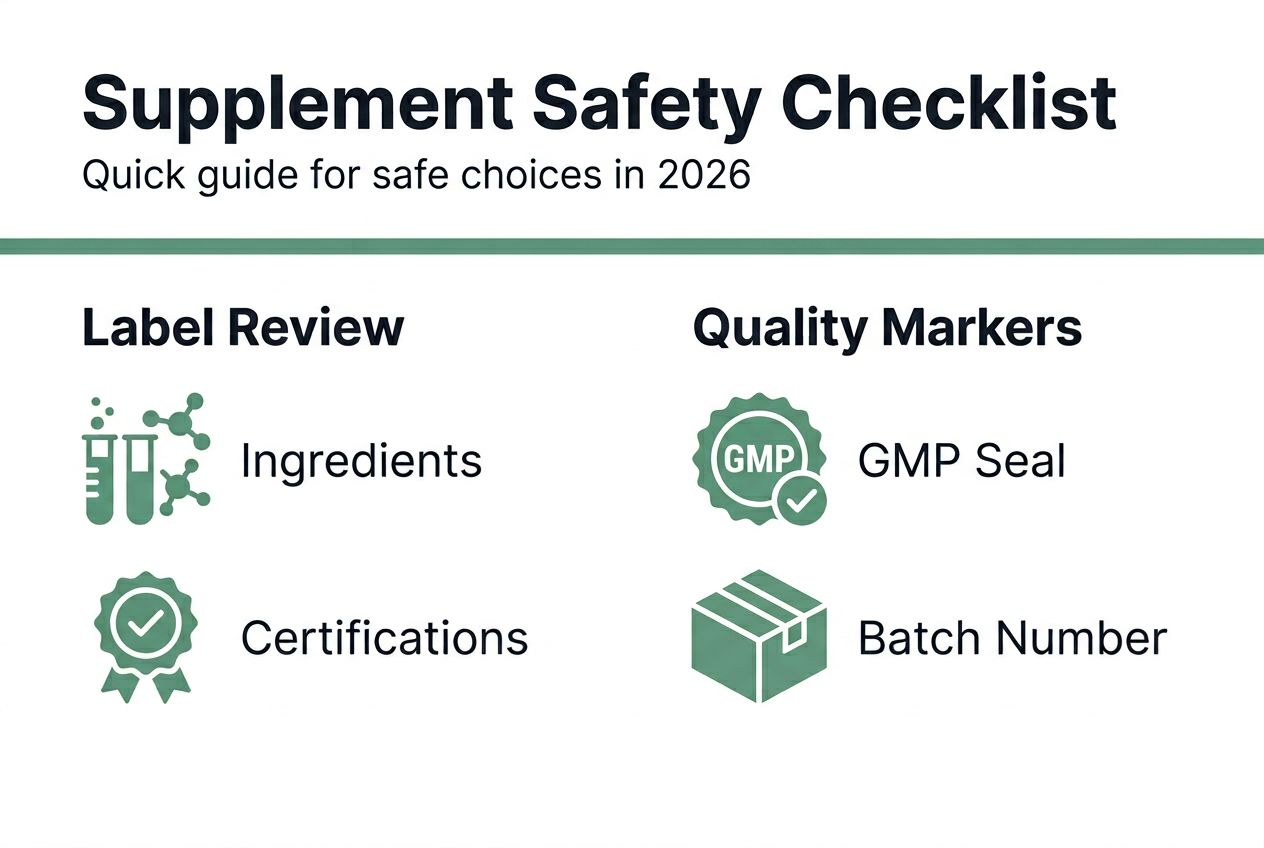
Verify manufacturer testing practices before purchasing supplements. Visit company websites to find quality assurance information, testing protocols, and certificates of analysis. Reputable brands publish this information openly and respond promptly to customer inquiries about safety procedures.
Actions to confirm quality assurance:
-
Check product packaging for third-party testing seals from recognized organizations
-
Visit manufacturer websites to review quality control policies and testing procedures
-
Request certificates of analysis showing batch-specific contaminant testing results
-
Verify facility GMP certification through regulatory or third-party databases
-
Research company reputation through consumer reviews and industry watchdog reports
-
Contact customer service to ask specific questions about testing and quality standards
For products targeting specific health goals, compare quality standards across brands. A Flexomore supplement review might reveal testing practices that set it apart from competitors. Use these comparisons to identify manufacturers who prioritize safety over cost cutting.
Warnings and red flags to avoid
Certain product characteristics signal elevated safety risks that should prompt immediate caution or complete avoidance. Recognizing these red flags protects you from supplements that could harm rather than help your health.
Unrealistic benefit claims without clinical support represent the most common warning sign. Products promising rapid weight loss, dramatic muscle gains, or disease cures typically exaggerate effects or contain undisclosed ingredients that create artificial results. Over 30% of supplements with unverifiable claims have associated safety warnings from regulatory agencies.
Undisclosed or synthetic fillers pose hidden dangers that labels may not reveal. Some manufacturers use pharmaceutical analogs that mimic drug effects without declaring them. These substances can interact dangerously with medications or cause severe side effects. Products marketed for athletic performance and sexual enhancement carry particularly high risks for adulteration.
“Supplements making extraordinary claims without published clinical trials or third-party verification should trigger immediate skepticism. No legitimate product needs to hide behind marketing hype rather than demonstrating safety and efficacy through transparent testing.” - Dr. Pieter Cohen, Harvard Medical School researcher on supplement safety
Absence of third-party testing and certification indicates manufacturers chose not to verify product quality independently. This decision often reflects awareness that products would fail testing or reveals unwillingness to invest in consumer safety. Avoiding uncertified supplements reduces exposure to contamination and mislabeling.
Common red flags to watch for:
-
Claims of rapid or dramatic results without credible scientific evidence
-
Missing third-party certifications despite being in regulated categories
-
Proprietary blends hiding individual ingredient amounts and sources
-
Marketing that emphasizes testimonials over published research findings
-
Lack of clear manufacturer information or customer service contact details
-
Products sold exclusively through unregulated online marketplaces
-
Prices significantly lower than certified alternatives suggesting cost-cutting on quality
Marketing tactics designed to obscure safety profiles include emphasizing “natural” ingredients as inherently safe, using before-and-after photos without context, and featuring celebrity endorsements instead of scientific backing. These strategies prey on consumer desires for quick solutions while diverting attention from absence of legitimate evidence.
Common mistakes and troubleshooting in evaluating supplement safety
Even informed consumers make evaluation errors that compromise safety and effectiveness of supplement choices. Understanding these pitfalls helps you develop more reliable assessment strategies.
Overreliance on brand marketing without evidence verification leads many consumers to choose popular supplements lacking safety data. Attractive packaging, celebrity endorsements, and social media buzz create impressions of legitimacy that may not reflect actual product quality. Marketing budgets often exceed research investments at companies prioritizing sales over safety.
Ignoring or undervaluing third-party testing seals represents another frequent mistake. These certifications provide independent verification that manufacturer claims are accurate and products meet safety standards. Consumer errors like trusting marketing or ignoring certifications contribute to 25-35% of adverse health incidents linked to supplements.
Failing to cross-check multiple trusted sources before purchasing leaves you vulnerable to misinformation. Single studies or reviews may present biased perspectives. Comprehensive evaluation requires consulting regulatory fact sheets, independent testing reports, peer-reviewed research, and user experiences to form complete safety pictures.
Pro Tip: Always research ingredient safety and certifications independently before making purchases, even for supplements from brands you trust. Manufacturing practices and ingredient sourcing can change over time without obvious label modifications.
Common evaluation mistakes:
-
Accepting marketing claims at face value without seeking scientific verification
-
Skipping certification checks because products appear professional or popular
-
Relying on single information sources rather than cross-referencing multiple authorities
-
Assuming all supplements in a category carry similar safety profiles
-
Overlooking potential interactions between supplements and medications
-
Failing to verify manufacturer reputation through independent consumer reports
Develop a personal checklist to avoid these pitfalls systematically. Include steps for label review, certification verification, scientific research consultation, manufacturer vetting, and interaction screening. Following this checklist for every supplement purchase creates consistent standards that protect your health over time.
Expected outcomes and evaluation timelines
Understanding realistic timeframes for monitoring supplement safety helps you detect problems early while giving products fair trials to demonstrate benefits. Setting appropriate expectations prevents premature judgments and protects against prolonged exposure to harmful products.
Most adverse reactions to supplements appear within 4-8 weeks of consistent use. This window allows sufficient exposure for allergic reactions, organ stress, and other safety issues to manifest in noticeable symptoms. Track your health carefully during this initial period using a journal or health app to document any changes.
Indicators of safe supplement use include stable health markers, absence of new symptoms, and gradual progress toward intended health goals. You should feel generally well without experiencing digestive upset, headaches, fatigue, or other concerning symptoms. Blood work and other objective measures should remain within healthy ranges or show improvement.
Warning signs requiring immediate discontinuation include severe allergic reactions, persistent gastrointestinal problems, unexplained fatigue or weakness, changes in heart rate or blood pressure, mood alterations, or any symptom that concerns you. These signals indicate potential safety issues that require professional evaluation.
Know when to seek healthcare professional advice about supplement use. Consult your doctor before starting supplements if you take medications, have chronic health conditions, are pregnant or nursing, or plan to use products for extended periods. Report adverse reactions promptly to help protect other consumers through regulatory reporting systems.
Monitoring guidelines:
-
Assess supplement effects over 4-8 weeks before deciding to continue long-term use
-
Document health changes, side effects, and progress toward goals systematically
-
Discontinue immediately if you experience concerning symptoms or reactions
-
Schedule follow-up health screenings to verify supplements aren’t causing hidden damage
-
Stay informed about new research and safety alerts related to products you use
-
Adjust supplement choices based on evolving evidence and personal health responses
Stay proactive in your supplement safety monitoring even after initial evaluation periods pass. New research may reveal risks not apparent in early studies. Manufacturing changes can alter product quality over time. Continuous vigilance protects your health as circumstances evolve.
Explore trusted supplement reviews and rankings
Navigating supplement safety becomes easier when you access comprehensive, evidence-based product evaluations. RankOfSupplements provides detailed safety assessments and quality rankings that complement the evaluation skills you’ve developed through this guide.
Our platform analyzes supplements across multiple dimensions including ingredient transparency, third-party certifications, scientific backing, and user experiences. Each review examines safety testing practices, contamination risks, and regulatory compliance to help you make informed decisions quickly. Whether you’re researching a Nutrigo Lab Strength review or exploring immune support supplements, you’ll find objective analyses grounded in current scientific evidence.
Discover how top-rated products compare in our rankings for 2026. From joint health options like Flexomore to performance enhancers, we evaluate safety profiles alongside effectiveness to identify supplements that deliver results without compromising your wellbeing. User insights complement scientific data to provide complete perspectives on real-world supplement performance and safety.
Frequently asked questions
Is it safe to trust supplements with FDA approval?
The FDA does not pre-approve dietary supplements for safety before they reach the market. The agency monitors adverse effects after products are sold and can take action against dangerous supplements only after harm occurs. You must use third-party certifications and scientific evidence to assess safety independently rather than relying on FDA oversight alone.
How can I verify if a supplement has been third-party tested?
Look for certification marks like NSF Certified for Sport or USP Verified on product packaging or manufacturer websites. These seals indicate independent testing for contaminants and label accuracy. You can verify certifications by searching product names in certification organization databases, which often provide batch-specific test results for confirmed products.
What should I do if I experience side effects from a supplement?
Stop taking the supplement immediately and monitor your symptoms closely. Contact a healthcare professional promptly to discuss your reaction and determine if medical evaluation is needed. Report adverse events to the FDA through their Safety Reporting Portal or equivalent agency in your country to help protect other consumers from similar risks.
How long should I assess a supplement’s safety before deciding to continue?
Most adverse effects from supplements appear within 4 to 8 weeks of consistent use. Monitor your health carefully during this initial period, tracking any symptoms or changes in how you feel. If you experience no concerning reactions and see progress toward your health goals, you can generally continue use while remaining alert for delayed effects.