
Table of Contents
Key Takeaways
Point Details
Prioritize diet first Most nutrient needs are met through food; only supplement confirmed gaps.
Verify supplement quality Use third-party certifications to ensure safety, purity, and accuracy.
Choose evidence-backed supplements Creatine and protein are best for muscle, while most weight loss supplements lack support.
Buy safe, avoid counterfeits Purchase from trusted sources and check certification seals to minimize risks.
Monitor and adjust routine Start low, track effects, and consult professionals for safe adjustments.
Assess your personal needs before supplementing
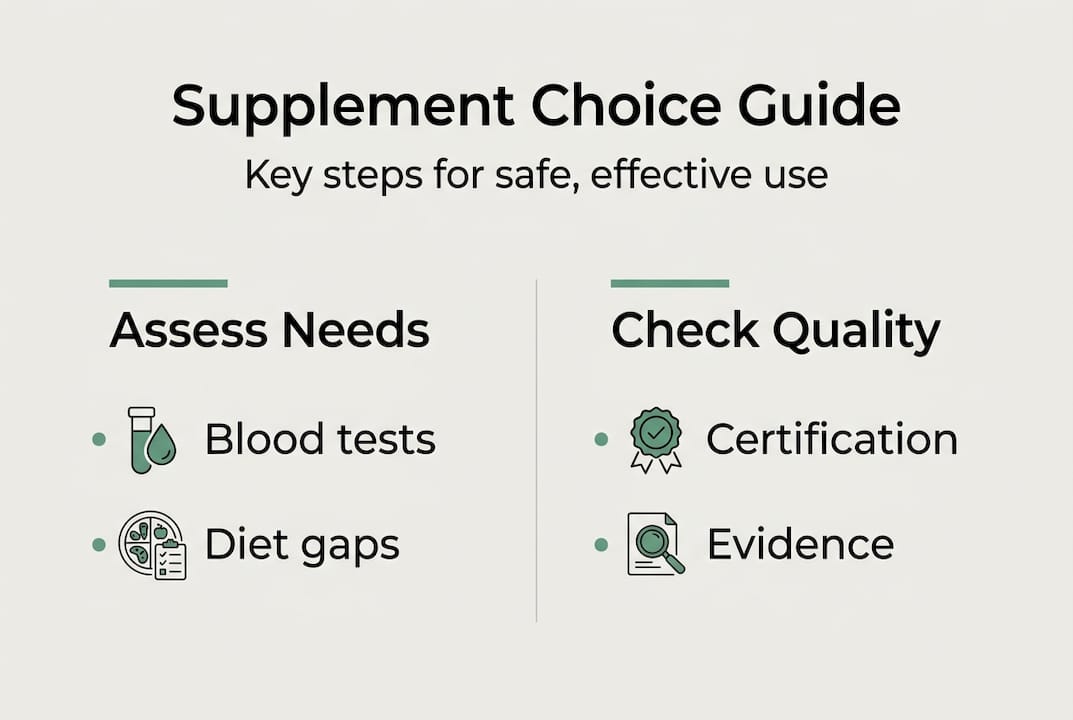
How do you know if you need supplements at all? The honest answer is that most people do not, at least not without checking first. Starting with a diet analysis is the smartest move you can make. Track your food intake for a week using an app like Cronometer or MyFitnessPal and look for consistent nutrient shortfalls. If you are regularly falling short on protein, iron, or specific vitamins, that is a real gap worth addressing.
Blood tests take the guesswork out entirely. A simple panel can reveal deficiencies in vitamin D, B12, iron, and magnesium that food tracking alone might miss. Supplement safety and effectiveness research consistently shows that assessing personal needs through diet analysis or bloodwork before supplementing helps you avoid unnecessary or excess intake. Taking supplements you do not need is not just wasteful. It can actually cause harm in some cases.
Here is what to check before buying anything:
-
Track your diet for at least 5 to 7 days to spot nutrient patterns
-
Request a blood panel from your doctor covering vitamin D, B12, iron, and ferritin
-
Identify whether gaps are consistent or just occasional
-
Consider your life stage, activity level, and any dietary restrictions
-
Talk to a registered dietitian if results are unclear
As diet-first guidance makes clear, most healthy people meet their nutrient needs through food, and supplements work best when they fill gaps confirmed by actual testing.
Pro Tip: Do not buy a supplement because a friend swears by it. Your deficiencies are not their deficiencies. Get your own data first.
Understand supplement types and their evidence
Now that you know how to assess your needs, let’s explore which supplement types actually deliver results. Not all supplements are created equal, and the gap between strong evidence and marketing hype is enormous.
For muscle building, the science is clear. Creatine monohydrate at 3 to 5g per day increases strength and lean mass when combined with resistance training. That is one of the most replicated findings in sports nutrition. Protein supplements help you hit the 1.6 to 2.2g per kg per day intake target when your diet falls short. These two are the foundation.
For weight loss, the picture is far less impressive. Most weight loss supplements lack evidence for long-term effectiveness. Caffeine and green tea extract show modest short-term effects, but nothing replaces a calorie deficit and consistent exercise. Protein still earns its place here because it preserves muscle during a cut.
For general wellness, vitamin D (only if you are deficient), omega-3 fatty acids at 1 to 2g of EPA and DHA per day for heart and inflammation support, and a basic multivitamin for dietary gaps are the most evidence-supported wellness options.
Supplement Goal Evidence level Key risk
Creatine monohydrate Muscle building Strong Minimal at standard doses
Protein powder Muscle building, weight loss Strong Excess calories if overused
Caffeine Weight loss, performance Moderate Tolerance, sleep disruption
Vitamin D Wellness (if deficient) Strong Toxicity at very high doses
Omega-3 (EPA/DHA) Wellness, inflammation Moderate to strong Blood thinning at high doses
Fat burner blends Weight loss Weak to none Cardiovascular risk
The NIH and NCCIH warn that most performance and weight loss supplements are either ineffective or carry real safety risks. Understanding the synergy of exercise supplements with your training program matters more than chasing the latest trend.
Pro Tip: If a supplement does not have at least two independent human trials supporting its main claim, treat it as unproven. Marketing language is not evidence.
A solid muscle building supplement guide will always point you back to creatine and protein as the starting point, not exotic extracts.
Verify supplement quality, purity, and safety
Once you know which supplements work for your goals, checking their quality and safety is critical. The supplement industry is not regulated the same way pharmaceuticals are. That means the label on the bottle is not always a guarantee of what is inside.

Third-party certifications are your best protection. USP Verified, NSF, and GMP certifications verify purity, potency, label accuracy, and the absence of contaminants like heavy metals, microbes, and pesticides. NSF Certified for Sport goes a step further and screens for banned substances, which matters if you compete.
Certification What it checks Best for
USP Verified Potency, purity, dissolution General consumers
NSF/ANSI 173 Label accuracy, contaminants General consumers
NSF Certified for Sport Banned substances, contaminants Athletes, competitors
GMP (Good Manufacturing Practice) Manufacturing standards Baseline quality assurance
Where you buy matters just as much as what you buy. Counterfeit supplement risks are significantly lower when you purchase directly from brand websites or established pharmacies rather than unverified third-party marketplaces. Fakes are more common than most people realize, and they can contain wrong doses or unlisted ingredients.
Here is a quick safety checklist before any purchase:
-
Look for at least one recognized third-party certification seal
-
Check the brand’s website for a certificate of analysis (COA)
-
Avoid products with proprietary blends that hide individual ingredient doses
-
Verify the manufacturer uses GMP-certified facilities
-
Cross-reference the product on the supplement purity explained resource for deeper context
For a broader look at what these standards actually require, third-party supplement standards break down the testing process in detail. You can also use a supplement safety checklist to run through the key steps before committing to a product.
Pro Tip: Always download or request the certificate of analysis for any supplement you plan to use long-term. Reputable brands make this easy to find.
How to start, monitor, and adjust your supplement routine
After verifying supplement quality, it is time to implement your routine and monitor its impact. Starting smart means starting slow.
Follow these steps to build a routine that actually works:
-
Start with the lowest effective dose listed on the label or recommended by your healthcare provider
-
Give it time by committing to a consistent 4 to 12 week trial before judging results
-
Track your response by logging energy, performance, body composition, and any side effects weekly
-
Reassess with a professional after your trial period, especially if you are using multiple supplements
-
Adjust based on data, not feelings. If a supplement is not moving the needle after 12 weeks, it probably is not the right fit
The key principle here is that starting low and monitoring effects over 4 to 12 weeks, combined with professional reassessment and lifestyle integration, produces the best outcomes. Supplements are not shortcuts. They work when they are layered on top of solid nutrition and consistent training.
Watch for these signs that something needs adjusting:
-
Digestive discomfort that persists beyond the first two weeks
-
No measurable change in the target outcome after 8 to 12 weeks
-
New symptoms that appeared after starting a supplement
-
Interactions with medications you are taking
For a practical framework on evaluating supplement quality as you go, that resource covers what to look for at each stage of your routine.
Pro Tip: Keep a simple weekly log in a notes app or spreadsheet. Record the supplement name, dose, timing, and any changes you notice. This makes it easy to spot patterns and gives your doctor useful information at your next visit.
Find trusted supplement reviews and recommendations
With your process set, here are resources to support your ongoing supplement decisions. Knowing the steps is one thing. Having reliable, science-backed reviews to reference when you are ready to buy is another.
At RankOfSupplements.com, every review is built on the same evidence-first framework you just read through. Whether you are looking to review Nutrigo Lab Strength for muscle building support or explore top immune support supplements for your wellness stack, the rankings are grounded in real research, not sponsored hype. You can browse supplement rankings across every major health goal to find options that match your verified needs, your budget, and your quality standards. Making a confident supplement choice should not require hours of research on your own.
Frequently asked questions
What certifications should I look for when choosing supplements?
Look for USP Verified, NSF, or GMP seals to confirm purity, potency, and the absence of harmful contaminants. NSF Certified for Sport is the gold standard if you compete.
Can most people meet their nutrient needs through food alone?
Yes. Most healthy people get what they need from a balanced diet, and supplements are most valuable when bloodwork or diet tracking confirms a real gap.
What supplement is best for muscle building?
Creatine monohydrate and protein supplements are the most evidence-backed options. Creatine at 3 to 5g per day consistently improves strength and lean mass when paired with resistance training.
Are weight loss supplements effective long-term?
Rarely. Most weight loss supplements do not show meaningful long-term results. A sustained calorie deficit and regular exercise remain the only proven strategies for lasting fat loss.
How can I avoid counterfeit or unsafe supplements?
Buy directly from brand websites or licensed pharmacies. Counterfeit risk drops significantly when you skip unverified online marketplaces and always check for third-party certification seals before purchasing.