
Table of Contents
Key takeaways
Point Details
Define clear health goals Your specific objective guides which supplements to select and how much to take.
Time intake strategically Taking supplements around workouts and meals maximizes absorption and effectiveness.
Follow safe dosage ranges Stay within clinically supported limits to prevent toxicity and ensure benefits.
Introduce gradually Add one new supplement every 1-2 weeks to monitor individual effects and side effects.
Expect results in 4-6 weeks Consistent, optimized intake produces measurable improvements within this timeframe.
Prerequisites: what you need before optimizing supplement intake
Before adjusting your supplement routine, establish a foundation that ensures safety and personalization. Identify your specific health goals first: are you targeting weight loss, muscle gain, or general wellness? Clear objectives guide every decision you make about which supplements to take and how much.
Consult a healthcare professional for baseline labs including vitamin D levels to understand your current nutritional status. Blood tests reveal deficiencies and prevent unnecessary supplementation. Review all current medications and supplements to assess potential interaction risks, since combining certain products can reduce effectiveness or cause harm.
Organize a daily schedule to plan when you will take each supplement. Consistency matters as much as choice. Use a notebook or app to track timing, dosage, and any symptoms you notice.
Pro Tip: Keep a supplement journal for the first month to identify patterns between intake timing and how you feel throughout the day.
Key preparatory steps include:
-
Clarify whether your primary goal is weight loss, muscle gain, or wellness enhancement.
-
Schedule lab work to check baseline nutrient levels like vitamin D, iron, and omega-3 fatty acids.
-
List all current medications and supplements to identify possible interactions.
-
Create a daily timetable showing meal times, workout windows, and supplement slots.
Step 1: align supplement choices with your health goals
Choosing supplements that match your specific objective maximizes results and avoids wasting money on products that do not support your aims. Protein and creatine are effective for muscle gain, while fiber and green tea extract support weight loss, and vitamin D and omega-3 aid wellness.
For muscle gain, prioritize protein powder to meet daily protein targets and creatine monohydrate to enhance strength and performance. These two supplements have the strongest evidence for supporting muscle synthesis and recovery. If weight loss is your focus, consider fiber supplements that increase satiety and green tea extract that may boost metabolism modestly.
For overall wellness, vitamin D supports immune function and bone health, especially if you live in northern climates with limited sun exposure. Omega-3 fatty acids from fish oil reduce inflammation and support cardiovascular health. Avoid trendy supplements without solid research backing, as they rarely deliver promised benefits.
Consider supplement form and convenience aligned with your lifestyle. Powders mix easily into shakes but require preparation. Capsules offer portability but may contain fillers. Choose formats you will actually use consistently.
Effective supplement selection by goal:
-
Muscle gain: protein powder, creatine monohydrate, branched-chain amino acids.
-
Weight loss: fiber supplements, green tea extract, caffeine (if tolerated).
-
Wellness: vitamin D, omega-3 fish oil, multivitamin for nutrient gaps.
-
Avoid: proprietary blends without disclosed ingredient amounts, unproven exotic extracts.
Explore muscle gain supplement reviews and weight loss supplement reviews to identify top-rated products that align with your objectives.
Step 2: optimize timing and sequencing of supplements
Proper timing dramatically improves absorption and effectiveness. Protein intake within 30-60 minutes post-workout enhances muscle protein synthesis significantly, making this window critical for recovery and growth.

Fat-soluble vitamins including A, D, E, and K require dietary fats for absorption, so take them with meals containing healthy oils, nuts, or avocado. Water-soluble vitamins like B and C absorb best on an empty stomach but can cause nausea, so taking them with light food is acceptable if needed.
Avoid simultaneous intake of caffeine and creatine, as caffeine may interfere with creatine’s performance benefits. Space these supplements at least two hours apart. Similarly, calcium blocks iron absorption, so separate these minerals by at least two hours if supplementing both.
Introduce supplements sequentially rather than all at once. Add one new product every one to two weeks to monitor individual effects and identify any adverse reactions. This gradual approach prevents confusion about which supplement causes specific changes.
Use a consistent daily schedule to maintain optimal timing. Set phone reminders if necessary. Consistency builds the routine into habit and ensures you do not miss critical dosing windows.
Optimal timing guidelines:
-
Take protein supplements within 30-60 minutes after resistance training.
-
Consume fat-soluble vitamins (A, D, E, K) with meals containing dietary fats.
-
Space caffeine and creatine intake by at least two hours.
-
Separate calcium and iron supplements by two hours minimum.
-
Add new supplements one at a time over 1-2 week intervals.
Pro Tip: Sync supplement timing with existing habits like breakfast or post-workout shakes to build consistency without extra effort.
Find more muscle gain timing tips and supplement timing insights to refine your schedule.
Step 3: determine safe and effective dosages
Following clinically supported dosage ranges prevents toxicity while ensuring you take enough to achieve benefits. Vitamin D dosing between 1000-4000 IU/day is effective and safe depending on blood levels, while iron should not exceed 45 mg/day without medical supervision.
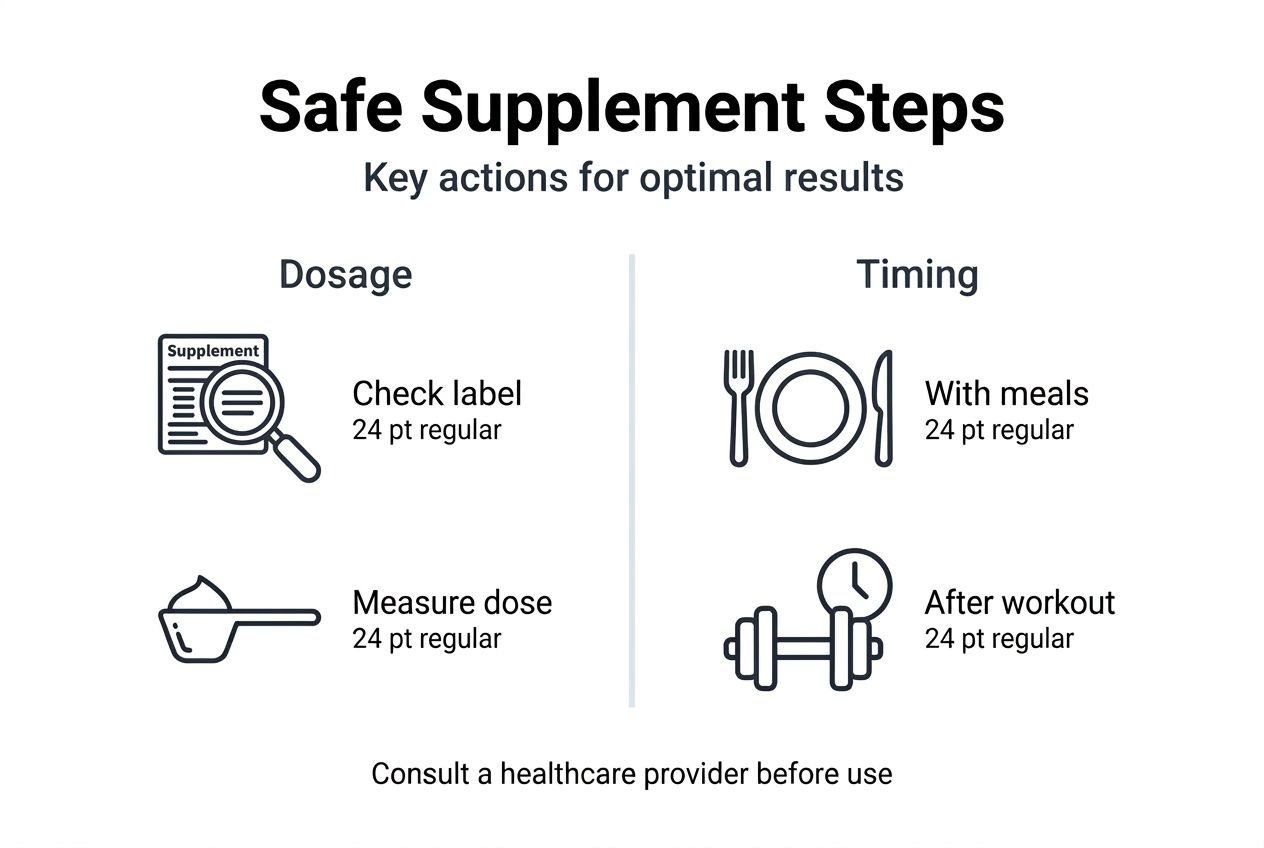
Adjust vitamin D dose according to your serum levels revealed by blood tests. If you are deficient, start at the higher end of the range. If levels are adequate, maintain with 1000-2000 IU daily. Exceeding 4000 IU without monitoring risks toxicity over time.
Limit iron intake strictly, as excess iron accumulates in organs and causes serious damage. The tolerable upper limit is 45 mg daily for adults. Only exceed this under direct medical guidance with regular monitoring. Most people obtain sufficient iron from diet alone.
Maintain creatine intake of 3-5 grams daily for performance benefits. Loading phases are unnecessary despite popular claims. Consistent daily dosing saturates muscle stores within three to four weeks and produces the same results as aggressive loading.
Supplement Safe Daily Range Special Considerations
Vitamin D 1000-4000 IU Adjust based on blood serum levels
Iron 18-45 mg Do not exceed 45 mg without medical advice
Creatine 3-5 g Loading phases unnecessary
Omega-3 1-3 g Choose high EPA/DHA content
Protein powder 20-40 g per serving Spread throughout day for optimal absorption
Avoid exceeding recommended dosages even if you believe more delivers better results. Excess vitamins and minerals cause adverse effects ranging from nausea to organ damage. More is not better with supplements.
Pro Tip: Use a kitchen scale to measure powder supplements accurately rather than relying on scoops, which often vary in actual volume.
Review dosage guidelines for supplements to ensure you are taking appropriate amounts.
Step 4: monitor, adjust, and troubleshoot common mistakes
Identifying and correcting frequent errors improves results and reduces health risks. 40% of supplement users make timing errors reducing nutrient absorption, while introducing supplements gradually prevents adverse effects.
Avoid taking supplements at random times throughout the day. Follow recommended timing guidelines for absorption, especially with protein after workouts and fat-soluble vitamins with meals. Random timing wastes money and reduces effectiveness.
Introduce only one new supplement every one to two weeks to monitor effects independently. If you add multiple products simultaneously and experience side effects, you cannot identify the culprit. Gradual introduction provides clarity.
Check for interactions between supplements and medications. Caffeine combined with creatine may reduce performance gains. St. John’s wort interacts with numerous prescription drugs. Research every combination before starting.
Consult healthcare providers when taking multiple supplements or if you experience adverse effects. Professional guidance prevents dangerous interactions and adjusts dosing based on your individual health status. Do not self-diagnose or ignore concerning symptoms.
Track your supplement routine in a journal or app. Note timing, dosage, meals, workouts, and how you feel. Patterns emerge over weeks that help identify and fix errors promptly.
Common mistakes to avoid:
-
Taking supplements at inconsistent times or random intervals throughout the day.
-
Adding multiple new supplements simultaneously without monitoring individual effects.
-
Ignoring known interactions like caffeine with creatine or calcium with iron.
-
Exceeding recommended dosages believing more produces better results faster.
-
Failing to track intake and symptoms to identify what works or causes problems.
Explore supplement troubleshooting tips to solve common issues quickly.
Step 5: understand expected results and measurable outcomes
Setting realistic expectations helps you stay consistent and recognize when adjustments are needed. Measurable improvements in strength and weight loss typically appear within 4-6 weeks of an optimized supplement regimen.
Expect noticeable strength gains or weight loss within four to six weeks with consistent intake and proper training or diet. Results take time as your body adapts to increased nutrient availability. Patience combined with tracking prevents premature abandonment of effective strategies.
Use performance markers or body measurements to track progress objectively. Record workout weights, repetitions, body measurements, or scale weight weekly. Subjective feelings matter but objective data reveals true progress.
Adjust your supplement plan based on results and side effect monitoring. If strength plateaus after eight weeks, consider increasing protein or creatine slightly within safe ranges. If you experience persistent digestive issues, switch supplement brands or forms.
Compare baseline health status with updated labs after three months to confirm nutrient level improvements. Follow-up blood tests validate that supplementation corrected deficiencies and that dosages are appropriate.
Timeframe Expected Outcome How to Measure
1-2 weeks Adaptation period, possible mild digestive changes Track daily energy and digestion
4-6 weeks Noticeable strength gains or weight changes Record workout performance and body measurements
8-12 weeks Plateau or continued progress requiring adjustment Compare workout logs and reassess dosing
3+ months Lab-confirmed nutrient level improvements Schedule follow-up blood tests
Remain patient and consistent to achieve sustainable wellness and fitness results. Short-term thinking leads to abandoning effective supplements before they produce full benefits. Track weekly but evaluate monthly for true progress assessment.
Check how to monitor supplement results for tracking strategies that work.
Explore trusted supplement reviews and rankings for 2026
Optimizing your supplement intake starts with choosing products backed by evidence and real user experiences. Discover top-rated supplements tailored for muscle gain, weight loss, and overall wellness through detailed reviews vetted by experts for 2026.
Read unbiased analyses comparing ingredients, dosages, and effectiveness to make informed buying decisions. Explore muscle gain supplements, weight loss supplements, and wellness supplements to find products that match your specific health goals and deliver measurable results.
Frequently asked questions
How long does it take to see results from optimized supplement intake?
Most people notice measurable changes in strength or weight within four to six weeks of consistent, properly timed supplementation. Individual variation means some experience faster improvements while others require eight weeks. Results depend on correct dosing, timing, adequate protein intake, and appropriate training or calorie management.
Can I take multiple supplements at the same time safely?
Introduce supplements one at a time over one to two week intervals to monitor individual effects and side effects. Avoid known interactions like caffeine with creatine or calcium with iron by spacing intake by at least two hours. Consult healthcare professionals if combining many supplements or taking prescription medications.
How important is supplement timing compared to dosage?
Both timing and dosage are critical for absorption and effectiveness. Taking the correct dose at the wrong time reduces benefits significantly, especially with protein post-workout or fat-soluble vitamins without dietary fats. Optimal timing enhances nutrient bioavailability and maximizes performance results.
What precautions should I take before starting supplements?
Consult a healthcare provider and obtain baseline blood tests to assess current nutrient levels. Check all current medications for potential interactions with planned supplements. Create a daily schedule to manage timing and dosage consistently from day one.