
Table of Contents
Key takeaways
Point Details
Voluntary verification Supplement certification is third-party testing that confirms safety, purity, and label accuracy where FDA approval doesn’t exist.
Major programs NSF, USP, ConsumerLab, and Informed Choice use rigorous lab testing and facility audits to verify quality claims.
Not a guarantee Certifications reduce contamination and mislabeling risks but don’t promise effectiveness or consistent potency over time.
Verification matters Always check official certifier websites to confirm seals are current and batch-specific, not outdated or fake.
Limited adoption High costs mean many quality supplements remain uncertified, so certification is one tool among several for smart choices.
What is supplement certification and why does it matter?
Walk into any pharmacy and you’ll see hundreds of supplement bottles making bold health claims. The shocking reality? None underwent FDA approval before sale. The agency only steps in after problems surface, leaving consumers to navigate a marketplace where quality varies wildly. This regulatory gap creates real risks: contaminated products, inaccurate labels, and ingredients that don’t match what’s printed on the bottle.
Supplement certification offers a solution through voluntary third-party programs that test products for purity, potency, contaminants, and label accuracy. These independent organizations act as watchdogs, verifying that what you see on the label matches what’s inside the capsule. When you choose certified supplements for immune support or other health goals, you’re getting products that passed rigorous testing protocols.
Certification addresses several critical quality concerns:
-
Heavy metal contamination that accumulates in your body over time
-
Microbial pathogens that cause illness
-
Ingredient potency that falls short of label claims
-
Undisclosed fillers or banned substances
-
Manufacturing inconsistencies between batches
The benefits extend beyond safety. Certified products undergo facility inspections to ensure consistent manufacturing practices. Labs verify that active ingredients meet claimed dosages and that no harmful contaminants exceed safe limits. This multi-layer approach catches problems before bottles reach your medicine cabinet.
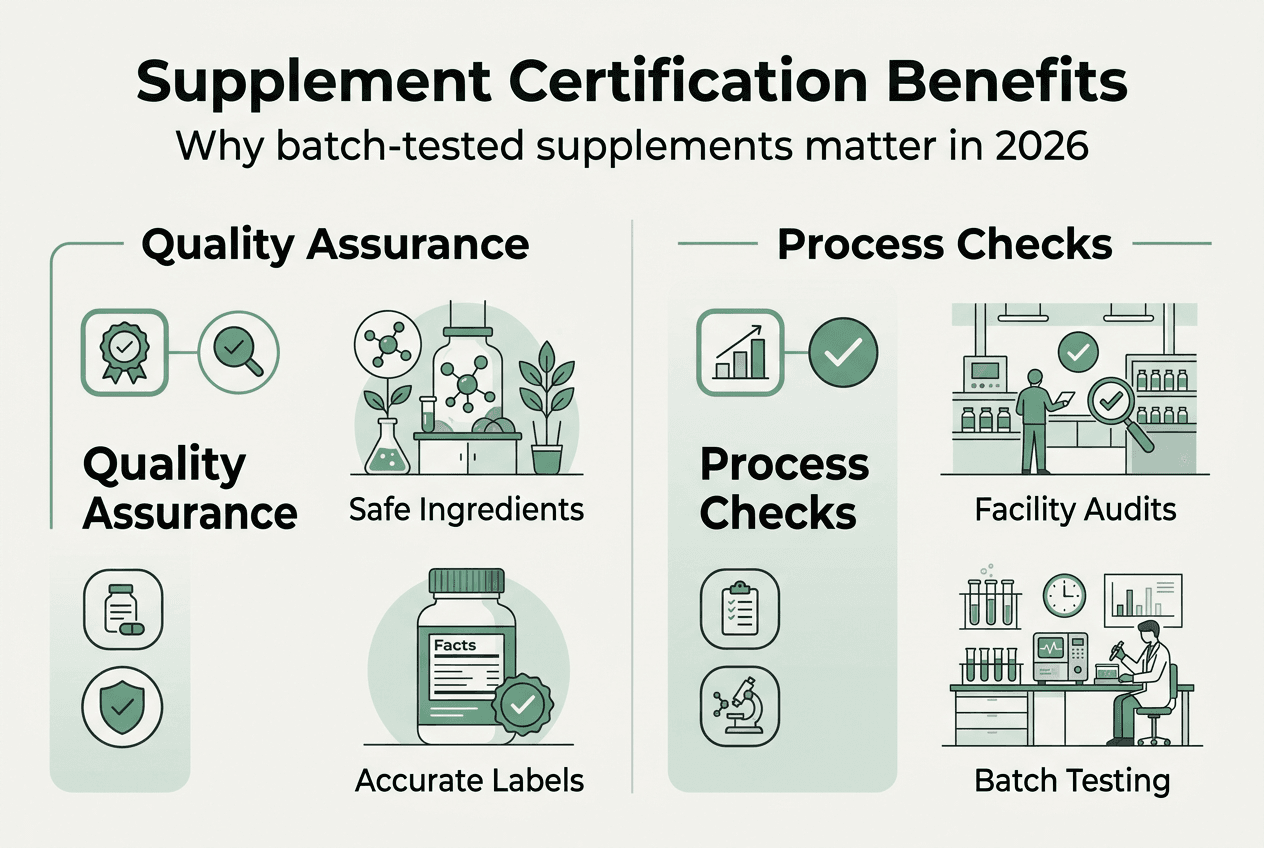
Here’s the catch: certification remains optional and expensive. Manufacturers pay thousands for testing and audits, so many skip the process entirely. This means plenty of quality supplements lack official seals, while some inferior products display fake certifications. The voluntary nature creates a complex landscape where educated consumers must look beyond seals alone.
Pro Tip: Always verify that a supplement’s certification applies to the specific batch you’re buying, not just the brand in general. Check the certifier’s website using the product’s lot number to confirm current status.
How are supplements tested and certified? The certification process
Certification isn’t a rubber stamp. It’s a detailed verification process that examines every aspect of supplement production and composition. Understanding these steps helps you appreciate what certified seals actually represent and why they cost manufacturers significant time and money.
The certification process unfolds through systematic stages:
-
Application and label review where certifiers examine all product claims and ingredient lists for accuracy and compliance
-
Toxicology assessment evaluating safety data for each ingredient and potential interactions
-
Laboratory testing using advanced analytical methods to measure exact ingredient amounts and detect contaminants
-
Facility inspection auditing manufacturing sites for Good Manufacturing Practice compliance and quality control systems
-
Ongoing surveillance requiring periodic retesting and unannounced facility visits to maintain certification status
-
Annual renewal with updated testing to account for formulation changes or new batches
Laboratories employ sophisticated techniques to verify quality. High-Performance Liquid Chromatography (HPLC) separates and measures individual compounds to confirm potency matches label claims. Inductively Coupled Plasma Mass Spectrometry (ICP-MS) detects trace amounts of heavy metals like lead, mercury, and arsenic at parts-per-billion levels. Microbiological testing screens for bacteria, yeast, mold, and pathogens that indicate contamination.
Testing Component Purpose Methods Used
Label accuracy Verify ingredients match claims Document review, formulation analysis
Potency verification Confirm active ingredient amounts HPLC, spectroscopy, dissolution testing
Contaminant screening Detect heavy metals and toxins ICP-MS, microbiological cultures
Manufacturing quality Ensure consistent production GMP audits, process validation
Facility audits examine far more than cleanliness. Inspectors review raw material sourcing, equipment calibration records, employee training documentation, and batch-to-batch consistency protocols. They verify that manufacturers follow written procedures and maintain detailed records. Any deviation triggers corrective action requirements before certification proceeds.
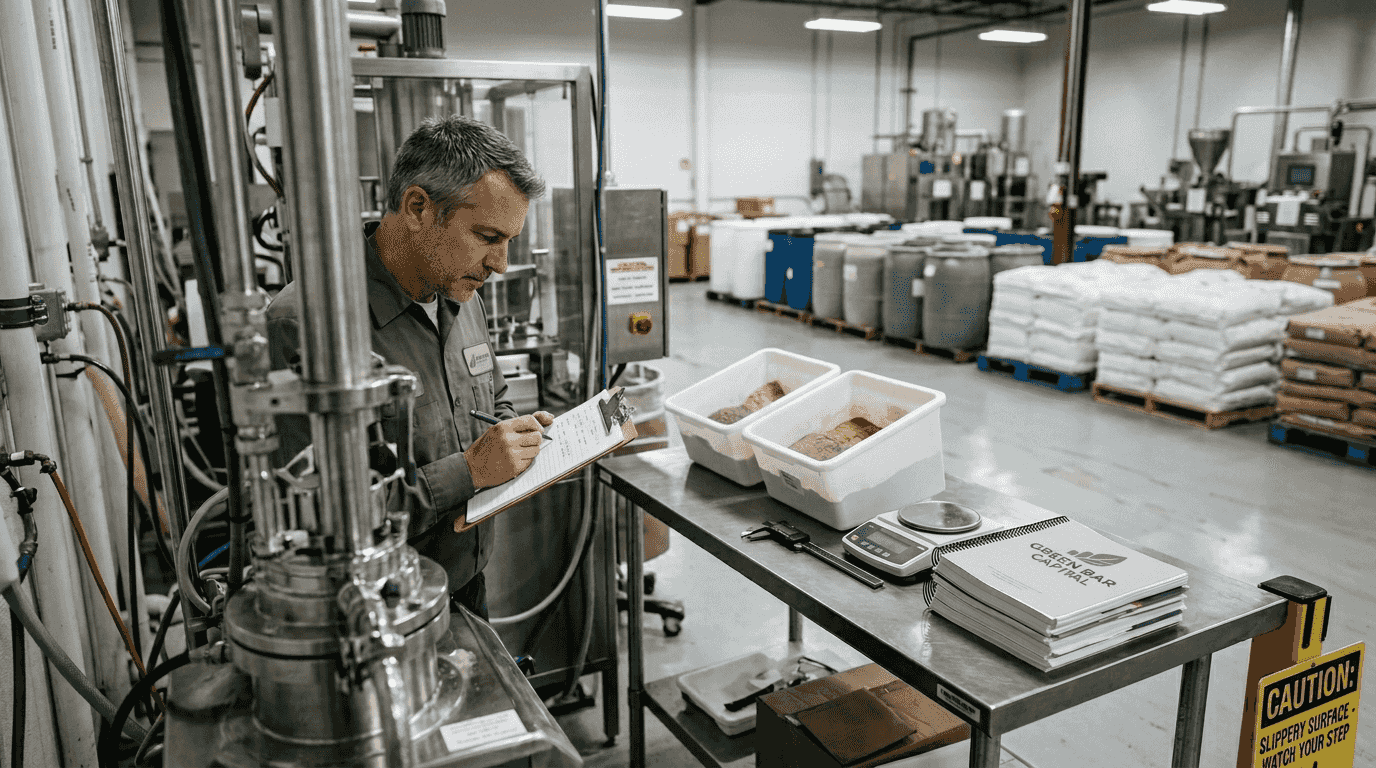
The rigor varies by certifier, but reputable programs require laboratories to hold ISO 17025 accreditation. This international standard ensures testing facilities maintain proper quality systems, use validated methods, and employ qualified personnel. When you see products reviewed on sites analyzing Nutrigo Lab Strength, certified versions underwent this level of scrutiny.
Batch-specific testing means each production run gets individual verification. A supplement certified in January might lose status by June if the manufacturer changes suppliers or formulations. Component testing examines raw materials before production, finished products after manufacturing, and stability over shelf life.
Pro Tip: Look for certifiers whose labs hold ISO 17025 accreditation to ensure testing meets international quality standards and produces reliable, defensible results.
Comparing major supplement certification programs
Not all certification seals carry equal weight. Major programs differ in testing focus, verification depth, and ongoing oversight requirements. Recognizing these distinctions helps you interpret what each seal promises and choose products aligned with your specific concerns.
NSF International operates several certification programs. NSF Certified for Sport screens for over 270 banned athletic substances, making it essential for competitive athletes. NSF Contents Certified verifies label accuracy and screens for contaminants but doesn’t test every ingredient claim. Both require facility inspections and ongoing product testing, with annual audits to maintain status.
USP Verified focuses on pharmaceutical-grade standards. The program tests ingredient identity, potency, purity, and dissolution (how well tablets break down for absorption). USP conducts surprise facility inspections and requires manufacturers to report any formulation changes. Products carrying the USP Verified mark underwent some of the industry’s most rigorous protocols.
ConsumerLab takes a different approach as an independent reviewer rather than a certifier hired by manufacturers. The organization purchases products retail, tests them in accredited labs, and publishes results publicly. Products passing earn the CL Seal of Approval. This model eliminates manufacturer influence but covers fewer products than certification programs.
Informed Choice specializes in screening supplements for substances banned in professional sports. The program tests every production batch for stimulants, steroids, and other prohibited compounds. Athletes subject to drug testing rely on this certification to avoid accidental violations.
Program Primary Focus Testing Scope Validity Period
NSF Certified for Sport Banned substances for athletes 270+ prohibited compounds, contaminants Annual with ongoing batch testing
USP Verified Pharmaceutical standards Potency, purity, dissolution, manufacturing Annual with surprise audits
ConsumerLab Independent consumer testing Ingredient accuracy, contaminants Single test publication
Informed Choice Athletic banned substances Steroids, stimulants, hormones Every batch tested
Verifying certification authenticity requires checking official sources. Manufacturers sometimes display outdated seals or use similar-looking logos without actual certification. Here’s how to confirm legitimacy:
-
Visit the certifier’s website and search their database using the product name and lot number
-
Verify the seal design matches current official logos, as programs update designs periodically
-
Check that certification covers your specific product variant, not just other items from the same brand
-
Confirm the certification date falls within the product’s manufacturing timeframe
-
Look for batch or lot-specific certification rather than generic brand approval
Products like Fibre Select benefit when manufacturers pursue certification, but the seal only matters if it’s current and verifiable. Some brands display certifications they held years ago but no longer maintain. Third-party programs combat this by requiring annual renewal and publishing searchable databases.
Each program serves different consumer priorities. Athletes need banned substance screening. Health-conscious buyers want contaminant testing. Those with absorption concerns value dissolution testing. Understanding these differences lets you prioritize seals that address your specific worries rather than treating all certifications as interchangeable.
Limitations and consumer tips for supplement certification
Certification provides valuable quality assurance, but it’s not a magic shield against all supplement problems. Understanding what certifications can’t do prevents false confidence and helps you make smarter purchasing decisions beyond just looking for seals.
The voluntary nature creates significant gaps. Certification costs range from $5,000 to over $20,000 annually, plus ongoing batch testing fees. Small manufacturers often can’t afford these expenses, leaving many quality products uncertified. Conversely, deep-pocketed companies selling inferior supplements can pay for certification as a marketing tool. Price and certification don’t always correlate with actual quality.
Batch-specific and time-limited certification means today’s certified bottle might differ from tomorrow’s purchase. Manufacturers reformulate products, change suppliers, or let certifications lapse. A seal on the label doesn’t guarantee the current batch underwent recent testing. Storage conditions after certification also matter. Heat, light, and moisture degrade supplements regardless of initial quality, reducing potency before expiration dates.
Certifications verify what’s in the bottle but say nothing about effectiveness. A supplement can contain exactly what the label claims, pass all contaminant tests, and still provide zero health benefits. Certification confirms quality and safety, not therapeutic value. This distinction matters when evaluating supplements for varicose veins or other specific conditions.
Controversies highlight testing limitations. Consumer Reports published alarming findings about heavy metals in protein powders, prompting industry pushback about methodology and context. Clean Label Project faced criticism for rating systems that some experts called misleading. Testing results require interpretation, and different labs using different methods sometimes reach different conclusions about the same product.
Smart consumers use certification as one decision factor among several:
-
Research the specific health claims and whether credible evidence supports the supplement’s purported benefits
-
Check for clinical studies on the exact formulation and dosage, not just individual ingredients
-
Compare certified and uncertified options from reputable manufacturers with transparent practices
-
Read independent reviews from sources not paid by supplement companies
-
Consult healthcare providers about potential interactions with medications or conditions
-
Store supplements properly in cool, dry places away from light to maintain potency
-
Track your own results and discontinue products that don’t deliver noticeable benefits
Pro Tip: Before trusting any certification seal, verify it on the official certifier’s website using the product’s lot number to confirm the seal is current, legitimate, and applies to your specific bottle.
Dr. Pieter Cohen, a supplement safety researcher, offers perspective: “Third-party certification reduces some risks, but consumers shouldn’t assume certified products are completely safe or effective. Certification testing is limited in scope, and many quality issues fall outside what these programs examine. It’s a helpful tool, not a complete solution.”
The reality is that supplement quality depends on manufacturer integrity, ingredient sourcing, production consistency, and storage throughout the supply chain. Certification verifies a snapshot in time under controlled conditions. Real-world variables introduce uncertainties that no testing program fully addresses. Use certifications to narrow choices, but combine them with research, professional guidance, and personal monitoring for the best outcomes.
Explore top certified supplements with rankofsupplements
Navigating supplement certification can feel overwhelming with multiple programs, varying standards, and thousands of products to evaluate. RankOfSupplements simplifies this process by providing science-backed reviews that highlight certification status alongside effectiveness evidence and safety profiles.
Our platform analyzes supplements across categories like immune support, strength building, and digestive health. Each review examines third-party testing, ingredient transparency, and clinical research supporting health claims. We identify which products carry legitimate certifications and explain what those seals actually verify.
Detailed reviews like our Nutrigo Lab Strength analysis break down certification details, ingredient quality, and real-world effectiveness. We also cover fiber supplements through reviews like Fibre Select, helping you understand how certification applies to different supplement categories.
Combining third-party certification with expert reviews gives you the best protection for your health investment. Browse our rankings to find supplements that meet both quality standards and effectiveness criteria, making informed choices easier in 2026’s complex supplement marketplace.
Frequently asked questions about supplement certification
What does supplement certification actually mean?
Supplement certification is voluntary third-party verification that tests products for safety, purity, potency, and label accuracy. Independent organizations analyze supplements in accredited labs and audit manufacturing facilities to confirm quality standards. Certification fills the regulatory gap left by the FDA’s lack of pre-market approval for dietary supplements.
Why doesn’t certification guarantee a supplement will work?
Certification verifies what’s in the bottle matches the label and meets safety standards, but it doesn’t test whether ingredients actually deliver health benefits. A supplement can be pure, accurately labeled, and completely ineffective for its claimed purpose. Quality and efficacy are separate issues that require different types of evidence.
How can I verify a certification seal is legitimate?
Visit the certifier’s official website and search their product database using the supplement’s name and lot number. Check that the seal design matches current official logos and that certification dates align with the product’s manufacturing timeframe. Fake seals and outdated certifications are common, so independent verification is essential.
What should I look for beyond certification when choosing supplements?
Research clinical evidence supporting the specific formulation and dosage, not just individual ingredients. Check manufacturer transparency about sourcing and testing. Read independent reviews from sources like Nutrigo Lab Strength that aren’t paid by supplement companies. Consult healthcare providers about your specific health needs and potential interactions.
Where can I find reliable reviews of certified supplements?
RankOfSupplements provides science-backed reviews that analyze certification status alongside effectiveness evidence and safety profiles. We examine third-party testing, ingredient quality, and clinical research to help you choose supplements that meet both quality standards and health goals. Our platform covers multiple categories with detailed, unbiased analyses.